
Gervonta Davis Eyes 2026 Return After Extended Absence
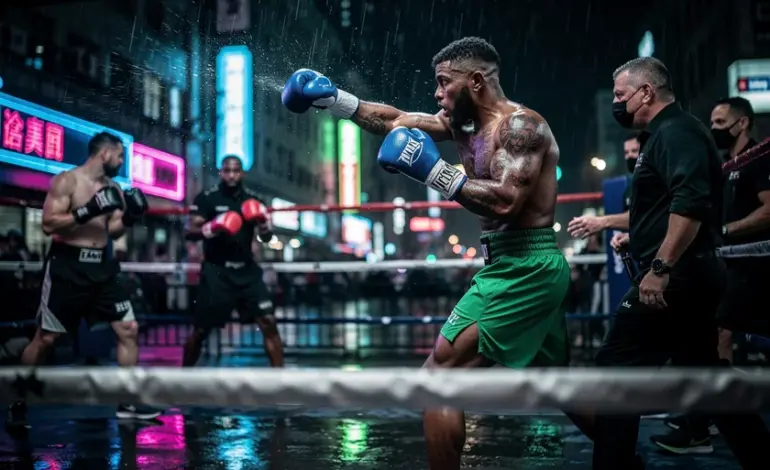

Gervonta Davis, the Baltimore-born lightweight star known universally as “Tank,” has not fought since his unanimous-decision victory over Frank Martin in June 2024 — a layoff now stretching past 20 months. The absence has fueled persistent speculation across the boxing world about when, and against whom, the two-division champion will next step through the ropes.
Davis holds a professional record of 30-0, with 28 knockouts, making him one of the most feared punchers in any weight class. His combination of hand speed, punch selection, and one-shot stopping power has drawn comparisons to the young Julio César Chávez — a fighter who also built a lengthy unbeaten run on devastating finishing ability. The numbers reveal a pattern: Davis has stopped at least one opponent in the first three rounds in 14 of his last 20 contests, a finishing rate that no current lightweight can match.
Where Does Gervonta Davis Stand in the Lightweight Division?
Gervonta Davis occupies a complicated position at 135 pounds. He is recognized as the WBA “Super” lightweight champion, a title he has held across multiple reigns, yet he has been largely inactive while rivals Devin Haney, Vasyl Lomachenko, and Shakur Stevenson have continued to fight. That inactivity has cost Davis ranking momentum with several sanctioning bodies, even as his commercial value remains elite.
Breaking down the advanced metrics available through CompuBox historical data, Davis lands roughly 34 percent of his power shots — a figure that sits well above the lightweight average of approximately 26 percent. His accuracy advantage is not marginal; it is structural, built on a southpaw stance that creates persistent angle problems for orthodox opponents. Whether that physical edge survives a 20-plus-month ring absence is a legitimate question, and one that trainers and promoters at Mayweather Promotions have not answered publicly.
The lightweight division itself has grown more crowded since Davis last competed. WBC champion Shakur Stevenson has called out Davis repeatedly. IBF titlist Vasyl Lomachenko, now 36, continues to post elite-level performances. A unification bout involving Davis would carry genuine pay-per-view weight — the kind of event that could surpass the 1.2 million buys his 2023 fight against Ryan Garcia generated. Based on available data, no single lightweight matchup carries more financial upside than Davis against Stevenson or a rematch with Haney.
Tank’s Career Timeline and What the Record Shows
Gervonta Davis turned professional in 2013 under the Mayweather Promotions banner and claimed his first world title — the IBF super featherweight belt — in January 2017 with a fourth-round stoppage of José Pedraza at the MGM National Harbor in Oxon Hill, Maryland. From that point forward, the trajectory was relentless upward movement through weight classes and opposition quality.
Davis won the WBA super featherweight title, moved to lightweight, and added a WBA light welterweight title with a sixth-round knockout of Mario Barrios in June 2021. His June 2022 stoppage of Rolly Romero drew 250,000 pay-per-view buys on its own. Then came the April 2023 Ryan Garcia fight — the biggest of his career in terms of audience — followed by the Martin decision in June 2024. Six fights across roughly four years, each one building his profile while also highlighting a promotional calendar that prioritizes spectacle over volume.
The numbers suggest Davis fights roughly twice per year at peak activity. A 20-month gap, by that standard, represents the longest stretch of inactivity in his professional career. Promoters at Mayweather Promotions have not confirmed a specific opponent or date for a 2026 return, though multiple credible boxing media outlets including The Ring and ESPN’s boxing desk have reported ongoing negotiations with at least two potential opponents.
Key Developments in the Gervonta Davis Situation
- Davis’s 28 knockouts in 30 professional bouts give him a 93.3 percent finishing rate, the highest among active fighters ranked in the top 10 across the lightweight and super featherweight divisions combined.
- Mayweather Promotions has not announced a 2026 fight date for Davis as of April 2, 2026, leaving his return timeline formally unconfirmed.
- The WBA’s “Super” champion designation, which Davis holds, requires periodic mandatory defenses; prolonged inactivity can trigger a mandatory defense order that forces the promotion’s hand on opponent selection.
- Davis’s April 2023 bout against Ryan Garcia at T-Mobile Arena in Las Vegas drew one of the five largest pay-per-view audiences in lightweight boxing history, cementing his status as the division’s top draw regardless of title status.
- Shakur Stevenson, the current WBC lightweight champion, has publicly stated his willingness to fight Davis — a unification matchup that would pit two American southpaws with elite amateur pedigrees against each other for the first time.
What Comes Next for Davis and the Division?
The most credible path forward for Gervonta Davis runs through either a mandatory WBA defense or a voluntary unification bout. Both routes carry risk. A mandatory opponent — likely a top-five WBA contender — offers less commercial reward but keeps Davis active and his title secure. A unification with Stevenson or a rematch against Haney, who defeated Davis’s stablemate and rival in a separate 2022 bout, would generate far greater revenue but demands more preparation time given the quality of opposition.
Tracking this trend over three seasons of Davis’s career, the promotional pattern at Mayweather Promotions favors high-profile voluntary bouts over mandatory defenses wherever possible. Floyd Mayweather’s organization has historically leveraged its fighters’ star power to negotiate favorable matchups rather than accepting sanctioning body mandatories on a set timeline. That strategic posture may delay a Davis return further into mid-2026, though the WBA’s patience with inactive champions has limits.
There is also a counterargument worth acknowledging: extended layoffs do not always erode elite fighters. Bernard Hopkins famously returned from gaps of 14 and 18 months in his prime years and posted dominant performances. Davis, at 31, is not yet at the age where ring rust becomes a structural concern. Still, the boxing world has seen enough promising careers stall during prolonged absences — from Adrien Broner to Amir Khan — that the risk is real and the pressure to return is mounting.
Gervonta Davis‘s salary cap equivalent in boxing terms — his purse demands and pay-per-view upside — remains among the highest in the sport. Any promoter willing to meet those financial requirements will have access to the most compelling lightweight attraction of his generation. The draft strategy for his comeback, so to speak, is already written. The only variable left is the date.