Anthony Joshua: Career Legacy, Style, and Boxing Impact
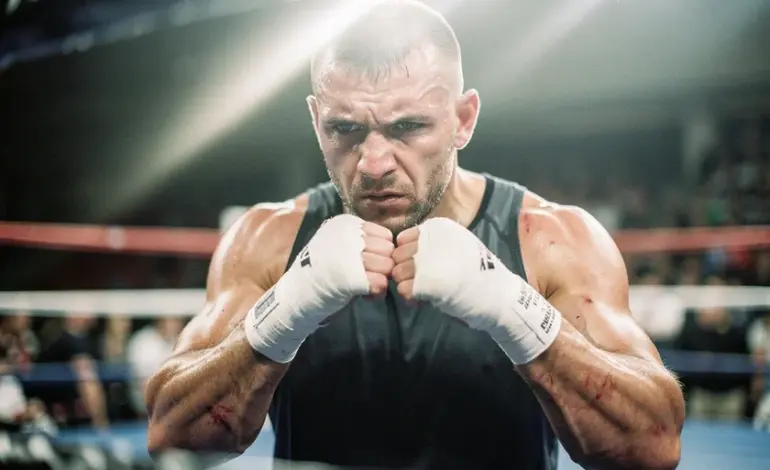

Anthony Joshua stands as one of the most consequential heavyweight boxers of the modern era — a fighter whose career arc encompasses gold-medal glory, multiple world title reigns, high-profile defeats, and hard-fought comebacks. Understanding what makes Joshua compelling requires looking beyond highlight-reel knockouts and examining the technical framework, psychological resilience, and divisional context that define his place in the sport’s history.
Who Is Anthony Joshua?
Anthony Joshua is a British-Nigerian professional heavyweight boxer who won Olympic gold at the 2012 London Games before ascending to hold the WBA, IBF, and WBO heavyweight titles simultaneously. His combination of elite amateur pedigree, physical dimensions, and developed ring craft placed him among the most recognizable combat sports figures globally within a decade of turning professional.
Joshua came to boxing relatively late compared to lifelong practitioners. Yet his natural athleticism and disciplined training approach accelerated his development at a pace that confounded conventional timelines. Trained through the English Institute of Sport system and later under head trainer Robert McCracken, he absorbed technical fundamentals that underpinned his entire professional run.
Standing around six feet six inches with a reach that generates leverage on straight punches, Joshua represents a structurally ideal heavyweight build. That frame, combined with hand speed that belied his size, allowed him to blend distance management with sudden, explosive combinations. His right hand became his most feared weapon — capable of ending contests against opponents who had absorbed punishment from other elite fighters without falling.
Championship Victories and Divisional Impact
The numbers reveal the scale of Joshua’s finishing ability: he converted a high percentage of his professional contests into stoppages, placing him among the most prolific finishers in heavyweight championship history. His ability to hurt opponents with single shots — rather than requiring sustained combination work — reflected genuine one-punch power that distinguished him from technically superior but less explosive contemporaries.
His most celebrated win came against Wladimir Klitschko at Wembley Stadium in 2017 — a back-and-forth battle widely regarded as one of the finest heavyweight contests of that decade, which Joshua won by stoppage after being knocked down himself. Klitschko had dominated the division for the better part of a decade before that night. Defeating him after surviving a knockdown validated Joshua’s championship credentials against a genuine all-time-great measuring stick.
That unified status — holding the WBA, IBF, and WBO titles simultaneously — placed Joshua in elite company, with only a handful of heavyweights ever consolidating three major sanctioning body titles in the four-belt era. His Wembley Stadium appearances drew attendances that ranked among the largest for any boxing event in British history, reinforcing his status as the sport’s primary commercial draw outside the United States during his peak years. Headlining events at both Wembley and Madison Square Garden demonstrated that heavyweight boxing could sustain pay-per-view interest across two continents — a shift that reshaped how promoters and broadcasters approached the weight class.
How Losses Shaped His Legacy
Joshua’s defeats — particularly to Andy Ruiz Jr. and Oleksandr Usyk — revealed specific technical vulnerabilities while simultaneously creating the adversity narrative that gives his career its dramatic texture. Those defeats did not erase his legacy; they complicated and deepened it in ways a clean, unbeaten record never could.
The first loss to Ruiz in 2019 at Madison Square Garden shocked the boxing world. Joshua was knocked down multiple times before the fight was stopped, exposing questions about his chin durability and his response to early adversity against a high-volume puncher. The rematch — won by Joshua on points in Saudi Arabia — demonstrated tactical intelligence and composure, though it drew criticism for over-reliance on movement rather than the aggressive style that had built his reputation.
The two losses to Usyk between 2021 and 2022 represented a more fundamental problem: film of both fights shows Joshua struggling to impose his physical advantages against a technically superior, mobile opponent who controlled distance across 24 combined rounds. Usyk’s southpaw angles and ring generalship neutralized Joshua’s straight-line power game in each contest. A segment of boxing analysts argues that Usyk represented a historically unusual stylistic problem that would have challenged any heavyweight of Joshua’s generation — and that the defeats reflect divisional context as much as individual limitation. Both readings contain merit.
Fighting Style: Technical Breakdown
Joshua’s style is best described as a structured, distance-based approach that prioritizes the right hand while using the jab to establish range and create openings. He is most effective when controlling the center of the ring against opponents who walk forward into his punching arc.
His offensive game is built around straight punches thrown with technical precision rather than wide, looping shots. His jab — when deployed consistently — functions as both a range-finder and a genuine scoring weapon, setting up the straight right hand responsible for the bulk of his stoppages. The bouts in which Joshua established jab dominance early were overwhelmingly the contests he controlled most comprehensively across his championship run.
Defensively, Joshua has historically relied on upper-body movement and ring generalship rather than head movement at close quarters. That approach works against linear punchers but creates exposure against fighters who generate angles — as the Usyk fights made plain. His footwork is functional rather than exceptional — adequate for maintaining range against slower opponents, but insufficient against elite movers who reposition quickly. Post-Ruiz adjustments incorporated more lateral movement and defensive discipline, though whether those changes represent durable technical progress or situational adaptations is a question only future performances can fully resolve.
Anthony Joshua’s Place in Heavyweight History
Anthony Joshua’s position in heavyweight boxing history is already secured by the titles he has held, the opponents he has beaten, and the audiences he has drawn to the sport. His resilience through adversity, willingness to engage in high-stakes rematches, and consistent presence at the top of a competitive division mark him as a fighter whose full analytical profile extends well beyond a simple wins-and-losses ledger. How the heavyweight division’s evolving landscape accommodates his continued pursuit of championship status will determine whether Joshua adds further chapters to an already substantial legacy.
What is Anthony Joshua’s professional boxing record?
Anthony Joshua turned professional in 2013 after winning Olympic gold at the 2012 London Games. The majority of his professional contests have ended by stoppage, reflecting his reputation as one of the most prolific finishers in modern heavyweight boxing. Exact fight totals are best verified against current official records, as his career has continued past widely reported milestones.
How many heavyweight championship titles has Anthony Joshua won?
Anthony Joshua has held the IBF, WBA, and WBO heavyweight titles during his career, becoming a unified heavyweight champion and one of the few fighters in the modern four-belt era to consolidate three major sanctioning body titles simultaneously. He has won and lost those titles across multiple championship reigns, making him one of the most active unified champions in recent heavyweight boxing history.
Why did Anthony Joshua lose his heavyweight titles and what happened after?
Anthony Joshua lost his unified heavyweight titles to Oleksandr Usyk in 2021, with Usyk winning on points using a mobile, southpaw-based style that neutralized Joshua’s straight-line power game. A rematch in 2022 produced the same result. Prior to the Usyk fights, Joshua lost to Andy Ruiz Jr. in 2019 — his first professional defeat — before regaining those titles in a rematch. Each loss was followed by a deliberate rebuild and return to high-level competition.