
Terence Crawford: Career Arc, Fighting Style, and Boxing Legacy
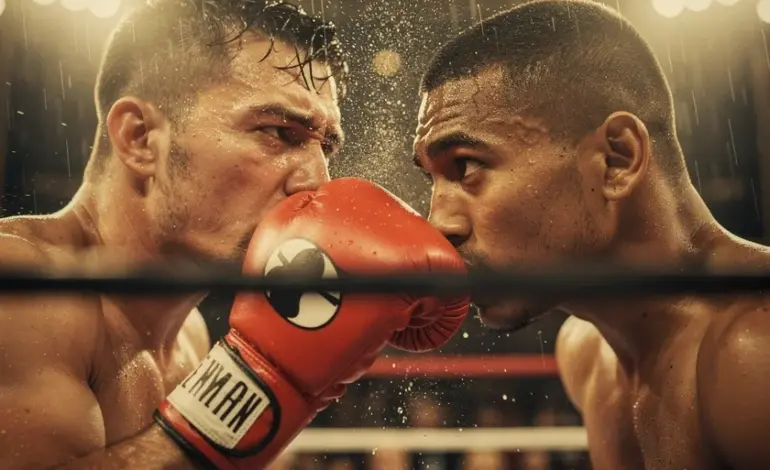

Terence Crawford stands as one of the most technically complete fighters in professional boxing history. An undefeated record, world titles at three weight classes, and a fighting intelligence that consistently dismantles elite opposition have positioned the Omaha native among the sport’s all-time greats.
Understanding what separates Crawford from his contemporaries requires examining not just his record, but the tactical architecture behind each performance.
Who Is Terence Crawford?
Crawford is an undefeated professional boxer from Omaha, Nebraska, who has held world titles at lightweight, junior welterweight, and welterweight. His genuine switch-hitting ability — boxing effectively from both orthodox and southpaw stances at the elite level — is among the rarest skills in the sport and forms the foundation of his competitive dominance.
Crawford built his craft through the amateur ranks in Nebraska before turning professional. He moved through the weight classes with a methodical approach shaped by his long-time trainer Brian McIntyre. That partnership produced a fighter who enters each bout with a clearly defined tactical blueprint.
His amateur background gave Crawford a defensive foundation that many power-first professionals lack. Neutralizing an opponent’s offense while setting up his own combinations — rather than absorbing punishment to land his own shots — defines a fighter who has prioritized technical mastery over highlight exchanges.
Major Fights and Career Milestones
Crawford’s career traces a deliberate climb through three divisions, each marked by title-winning performances that showcased a different facet of his game. The progression from lightweight champion to undisputed welterweight champion reflects sustained excellence rather than a single defining moment.
Title Wins and Unification Bouts
Crawford captured his first world title at lightweight, establishing championship credentials before moving up in weight. His run at 140 pounds added further belts and proved his ability to perform at the highest level across different physical matchups.
The welterweight division became the stage for his most consequential work. Reaching undisputed status there — unifying all four major sanctioning body titles — required defeating elite opposition under pressure. The manner of those victories, particularly his mid-fight tactical adjustments, underscored the ring intelligence that separates him from fighters with comparable physical tools.
Crawford vs. Errol Spence Jr.
Crawford’s bout against Errol Spence Jr. — a fellow undefeated welterweight champion — ranked among the most anticipated matchups in recent boxing history. Crawford’s performance demonstrated his capacity to dismantle an elite, physically imposing opponent through tactical adjustment rather than brute force. The outcome reinforced the argument that his ring intelligence functions as a genuine competitive weapon.
Crawford vs. Manny Pacquiao
His victory over Manny Pacquiao added a generational dimension to his résumé. Pacquiao — a multi-division world champion with championship experience spanning two decades — represented a high-volume, high-speed southpaw challenge. Crawford’s ability to control that fight from the outside before closing distance reflected a tactical versatility few fighters at any weight class possess.
Crawford’s Boxing Style: Switch-Hitting and Ring Intelligence
Crawford’s style is defined by switch-hitting, elite footwork, and a defensive structure that lets him gather information early before imposing adjustments. The system is designed to exploit whatever vulnerability an opponent presents — not built around a single weapon.
The Switch-Hitting Advantage
Genuine switch-hitting at the world championship level — where a telegraphed stance change can cost a round — is extraordinarily rare. Crawford uses stance changes as a tactical reset, forcing opponents to recalibrate their pressure and timing mid-combination.
A consistent pattern emerges across his title fights: Crawford uses the opening rounds to read an opponent’s rhythm, then layers adjustments — altered angles, changed stance, shifted distance — through the middle rounds. By the championship rounds, opponents are typically reacting to a fighter who has already solved their primary attack.
Footwork and Defensive Architecture
Crawford’s footwork operates as both an offensive and defensive tool. He uses lateral movement and pivot angles to exit the pocket after combinations, cutting off counter-punching opportunities. His defensive structure relies on head movement and shoulder rolls rather than a high guard, keeping him mobile and allowing quick return fire.
That approach limits accumulated damage across long fights and preserves his physical condition into the later rounds — where his tactical edge tends to compound most visibly.
Crawford’s Impact on Modern Boxing
Crawford’s sustained presence near the top of pound-for-pound rankings compiled by outlets including ESPN and The Ring magazine reflects a durable analytical consensus. That position signals that his skill set translates across weight classes and opponent styles — not just against a single type of challenger.
His undisputed welterweight reign added a modern chapter to a division that has historically produced some of boxing’s most celebrated champions. Fighters who aspire to undisputed status in their own divisions point to Crawford’s achievement as the benchmark for divisional dominance.
Crawford has also elevated the conversation around technical boxing as a commercially viable product — demonstrating that ring intelligence and tactical complexity can generate both critical acclaim and audience engagement at the sport’s highest level.
Crawford’s Hall of Fame Case and Long-Term Legacy
The Hall of Fame case, based on available evidence, is largely settled by the record itself. World championships at three weight classes, an undefeated record against elite opposition, and an undisputed welterweight reign represent the criteria by which boxing’s most decorated careers are evaluated.
Crawford’s technical style — built on footwork, adaptability, and switch-hitting mastery — has influenced how trainers and analysts discuss elite-level ring craft. That influence on the sport’s tactical vocabulary will outlast his active career regardless of what follows.
For boxing historians and casual fans alike, Crawford represents the clearest modern argument that cerebral fighting remains the most durable competitive model the sport produces.
How many world titles has Terence Crawford won?
Terence Crawford has won world championship titles at lightweight, junior welterweight, and welterweight. At welterweight, he achieved undisputed status by unifying all four major sanctioning body titles — WBA, WBC, IBF, and WBO — making him one of the few fighters in boxing history to hold all four belts simultaneously in a single division.
What is Terence Crawford’s professional boxing record?
Terence Crawford is undefeated as a professional boxer. He has held world titles at lightweight, junior welterweight, and welterweight against world-ranked opposition and has not suffered a professional loss. His undefeated record places him among a small group of multi-division champions who maintained that status throughout their prime years.
Why is Terence Crawford considered one of the best pound-for-pound boxers?
Crawford is considered one of boxing’s elite pound-for-pound fighters because of his undefeated record, world titles at three weight classes, and rare switch-hitting ability at the championship level. Victories over elite opponents including Errol Spence Jr. and Manny Pacquiao reinforce that assessment across multiple credible opposition benchmarks. Major outlets including ESPN and The Ring magazine have consistently ranked him among the sport’s top pound-for-pound fighters.